



Wet spots and poor wax adhesion are common appearance problems in scented jar Candles. They appear as irregular dark, cloudy, or translucent patches on the inner wall of a glass container, making the wax look as though it has separated from the jar. In most cases, these marks are not caused by water or leakage. They develop when Candle wax contracts during cooling and loses contact with parts of the glass surface.
For candle manufacturers, the challenge is to control wax formulation, glass preparation, pouring conditions, and cooling consistency. Although small wet spots do not necessarily affect burning performance, visible separation can reduce the perceived quality of a finished product, especially in premium Scented Candles sold in transparent glass jars. Understanding the causes helps buyers evaluate production quality and suppliers establish more consistent manufacturing standards.
What Causes Wet Spots and Poor Wax Adhesion?
The primary cause of wet spots is the difference in thermal behavior between candle wax and the glass container. Molten wax expands when heated and contracts as it cools into a solid state. If the wax contracts unevenly or the glass and wax cool at different rates, sections of the wax may pull away from the container wall. A thin air gap forms between the two surfaces, creating a patch that looks wet or cloudy when viewed from outside.
This phenomenon is commonly called wax pull-away or poor glass adhesion. It is particularly noticeable in transparent containers because even a small gap changes how light passes through the glass and wax.
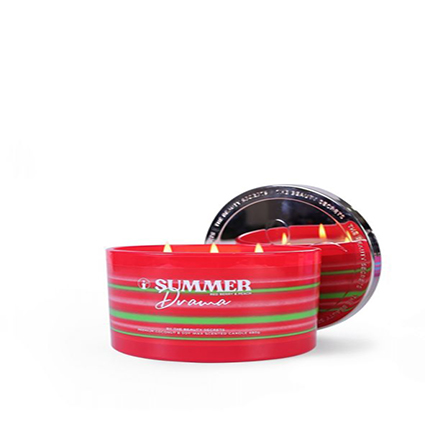
Wax Shrinkage During Cooling
Different wax formulations have different melting ranges, crystallization behaviors, and shrinkage characteristics. Paraffin wax blends, soy wax, coconut wax, and vegetable-based blends do not behave identically during solidification. Some formulations are more likely to contract away from glass, while others provide more consistent container adhesion.
For example, plant-based waxes may develop natural crystal structures as they cool, while paraffin-based formulations can show noticeable shrinkage. The final result also depends on the specific wax blend, fragrance concentration, dye, and cooling conditions. A wax that performs well in one jar design may not produce the same appearance in another container.
Incorrect Pouring and Cooling Temperatures
Pouring temperature directly affects how molten wax transfers heat to the glass and how quickly it begins to solidify. If the glass is significantly colder than the wax, the wax near the container wall may cool much faster than the center. This creates uneven solidification and increases the possibility of localized separation.
Excessively rapid cooling can also increase contraction stress. Air conditioning vents, open windows, cold production surfaces, and large temperature differences between production and storage areas can all contribute to inconsistent results.
AAK's Golden Wax troubleshooting guidance identifies wax contraction and rapid temperature changes during pouring or cooling as causes of pull-away and wet spots. Its recommended process adjustments include cleaning the glass, bringing containers to at least room temperature, using a lower pouring temperature where appropriate, and allowing candles to cool more slowly and evenly.
Glass Surface Contamination and Container Quality
Dust, grease, fingerprints, moisture, and cleaning residues can interfere with consistent contact between wax and glass. Even when the wax formula and pouring temperature are correct, contaminated containers may produce inconsistent adhesion across the same production batch.
Glass thickness is another important factor. A jar with uneven wall thickness may lose heat at different rates across its surface. The wax can therefore solidify unevenly, increasing the likelihood of visible pull-away. For bulk production, container specifications should include dimensional consistency, wall thickness, surface cleanliness, and resistance to thermal stress.
How Does Fragrance Oil Affect Wax Adhesion?
Fragrance oil is an essential component of Scented Candles, but its compatibility with the selected wax can influence the final appearance and physical stability of the product. Different fragrance compositions contain different aromatic materials, solvents, and carrier components. Their interaction with wax varies, so two fragrances used at the same percentage may not produce identical results.
If the fragrance load exceeds the wax system's recommended capacity, or if the fragrance is not properly incorporated, the finished candle may show oil separation, sweating, or changes in wax consistency. These defects are different from wet spots, although they can sometimes be mistaken for one another.
Fragrance Compatibility and Mixing Conditions
Manufacturers should evaluate each fragrance against the selected wax rather than assume that one formulation works for every scent. The fragrance addition temperature, mixing time, and stirring method should follow the wax supplier's technical recommendations. Insufficient mixing may create an inconsistent fragrance distribution, while excessive agitation can introduce air bubbles that become visible after pouring.
For example, a factory developing a new lavender-scented soy candle should compare the fragrance supplier's recommended dosage with the wax manufacturer's maximum fragrance load. It should then produce small test batches at controlled fragrance percentages and inspect the candles after cooling and curing. If oil droplets appear on the wax surface, the issue may involve fragrance compatibility or excessive loading rather than glass adhesion alone.
Why Do Wet Spots Appear After Candles Have Cooled or Been Stored?
Wet spots do not always appear immediately after pouring. A candle may look smooth when it first solidifies but develop visible patches during curing, packaging, transportation, or storage. This happens because wax and glass continue to respond to changes in ambient temperature.
Temperature fluctuations during distribution are especially relevant to international candle shipments. Finished candles may move between a climate-controlled factory, a warehouse, a shipping container, and a retail facility. Repeated heating and cooling can change the contact between the wax and glass, making previously invisible pull-away areas more noticeable.
Cooling Environment and Production Layout
Cooling should take place in a stable environment without direct airflow or sudden temperature changes. CandleScience recommends a cooling room temperature of approximately 70–76°F (21–24°C) in its soy wax troubleshooting guidance. This is a practical reference for the relevant wax system, not a universal temperature requirement for every formulation.
Spacing between containers also matters. If jars are placed too close together, adjacent containers can retain heat unevenly. Meanwhile, placing hot jars directly on a cold stone or metal surface may accelerate heat loss through the bottom. A cooling rack can help reduce uneven heat transfer and improve consistency.
Storage and Transportation Temperature Changes
Finished scented candles should be stored away from direct sunlight, heating equipment, and areas with significant temperature fluctuations. Packaging should also protect glass containers from impact and prevent excessive movement during transit.
For importers, a useful quality-control approach is to inspect samples before shipment and again after a simulated distribution test. For example, a buyer can retain samples from the same production batch, record their initial appearance, expose them to the temperature conditions specified in the buyer's logistics plan, and compare the glass adhesion afterward. This helps identify whether the defect originates during manufacturing or develops later in the supply chain.
How Can Manufacturers Reduce Wet Spots in Scented Jar Candles?
Reducing wet spots requires a controlled process rather than relying on a single adjustment. Manufacturers should first establish the correct relationship between the wax formulation, glass container, fragrance system, and production environment. Once the combination is validated, the same conditions should be maintained across production batches.
Prepare and Preheat Glass Containers
Glass jars should be inspected and cleaned before filling. They must be completely dry and free from dust, grease, and cleaning residues. Containers should also be brought to a stable temperature before pouring. Slight preheating can reduce the temperature difference between the glass and molten wax, allowing the wax to cool more evenly against the container wall.
Preheating temperature must be validated for the actual glass specification. Excessive heating or sudden temperature changes can create additional risks, particularly when containers have inconsistent thickness or existing defects.
Optimize Wax Formulation and Pouring Parameters
Wax selection should consider adhesion, fragrance compatibility, melting behavior, and the intended candle application. A manufacturer may compare different wax blends or supplier-recommended additives through controlled trials. However, changing the formula should not be the first response to every wet spot, because an unstable cooling environment or contaminated jar may be the actual cause.
Pouring temperature should be determined according to the wax manufacturer's technical data and verified through production testing. The wax should be fully melted and mixed consistently before filling. Pouring too quickly may trap air along the container wall, so a steady and controlled filling process is preferable.
Control Cooling and Post-Pour Inspection
After pouring, candles should remain undisturbed in a stable cooling area. Avoid placing them near fans, open doors, cold windows, or air-conditioning outlets. Containers should have sufficient spacing to prevent uneven heat retention between adjacent jars.
Inspection should take place at more than one point in the production cycle. A useful schedule is to check the candles after initial solidification, again after approximately 24 hours, and once more after the intended curing period. This makes it easier to identify defects that develop gradually rather than immediately after pouring.
What Should Buyers Check When Evaluating Scented Candle Manufacturers?
For overseas B2B buyers, wet spots should be evaluated as part of a wider product-quality assessment. A few small pull-away areas do not automatically indicate that a candle is unsafe or unsuitable for sale. However, widespread or inconsistent adhesion problems may indicate weak process control, unsuitable materials, or insufficient inspection.
When evaluating a scented candle manufacturer, buyers should request evidence of production consistency rather than rely only on product photographs or a single approved sample.
Review Material and Process Specifications
Ask the supplier to identify the wax type, fragrance load, glass specifications, pouring process, and cooling conditions used for the sample. The supplier should be able to explain how these variables are controlled and whether the formula has been tested with the exact container design.
For private-label and OEM projects, buyers should also confirm whether changes in fragrance, color, jar size, or wax blend require a new sample approval. Even a small material change can influence the final appearance of the candle.
Establish an Appearance Inspection Standard
Clear glass makes wet spots easier to see, so the acceptable appearance standard should be agreed before mass production. Buyers can define inspection conditions, lighting, viewing distance, and acceptable levels of visible pull-away. Photographs of approved samples can provide a practical reference for both the manufacturer and the purchasing team.
For example, a buyer sourcing 3,000 clear-glass scented candles can request samples from different positions in a pilot batch rather than approving only one candle. The buyer can record the number of samples showing visible wet spots, compare their severity, and agree on an acceptable appearance threshold before authorizing full production. This is an illustrative sampling approach; the final sample size and acceptance criteria should be based on the buyer's quality plan and order requirements.
Separate Appearance Quality from Burning Performance
Wet spots are generally cosmetic and do not automatically mean that the candle has poor fragrance throw or burning performance. Nevertheless, visual inspection cannot replace functional testing. Buyers should separately evaluate wick stability, flame behavior, melt pool development, soot formation, fragrance release, and container integrity under the intended use conditions.
A reliable supplier should be able to provide both appearance inspection records and relevant burn-test results. This distinction prevents buyers from treating every cosmetic variation as a functional failure while ensuring that genuine performance defects are not overlooked.
F&Q
Do Wet Spots Mean That a Scented Candle Is Defective?
Not necessarily. Wet spots usually indicate that the wax has pulled away from part of the glass surface during cooling or subsequent temperature changes. Small areas generally affect appearance rather than burning performance. However, extensive separation, cracks, leakage, or other abnormal conditions should be investigated before the product is approved for sale.
Can Wet Spots Be Completely Prevented in Soy Wax Candles?
There is no universal process that guarantees zero wet spots in every soy wax formulation. Natural wax composition, container geometry, fragrance compatibility, and temperature conditions all influence adhesion. Manufacturers can reduce the frequency and visibility of wet spots through material testing, clean containers, controlled pouring, and gradual cooling, but buyers should establish realistic appearance standards for the selected product.
Can a Heat Gun Permanently Fix Poor Wax Adhesion?
A heat gun can temporarily soften and remelt wax near the container wall, which may improve the visible appearance of an individual candle. However, it does not correct the underlying cause of poor adhesion. If the original problem comes from contamination, an unsuitable wax blend, or uneven cooling, the wet spots may return. For commercial production, process correction is more reliable than repeatedly repairing finished candles.
Conclusion
Wet spots and poor wax adhesion in scented jar candles mainly result from wax shrinkage, uneven cooling, container contamination, glass thickness variation, and formulation compatibility. Although these patches are generally cosmetic, they can influence the perceived quality of products sold in transparent jars and create avoidable complaints in wholesale and retail markets.
For manufacturers, consistent results depend on selecting compatible wax and fragrance materials, preparing clean containers, validating pouring temperatures, and maintaining stable cooling conditions. For overseas buyers and importers, supplier evaluation should include material specifications, sample consistency, appearance standards, and independent assessment of burning performance.
A supplier that can explain its manufacturing parameters, demonstrate repeatable quality checks, and maintain consistency between approved samples and bulk production is better positioned to support long-term OEM, private-label, and wholesale scented candle projects.