



Sinkholes and air pockets in container Candles are mainly caused by wax shrinkage during cooling, uneven temperature changes, and air trapped during mixing or pouring. As molten wax changes from liquid to solid, its volume decreases. If the wax near the surface or container walls hardens before the center has finished cooling, the remaining liquid wax may contract and leave an empty space. This can appear as a crater around the wick, a hollow cavity beneath the surface, or small holes inside the Candle.
For Candle brands and wholesale buyers, these defects are more than cosmetic concerns. They can affect product consistency, finishing quality, packaging presentation, and customer satisfaction. Understanding the relationship between wax formulation, pouring temperature, container preparation, and cooling conditions helps manufacturers reduce defects before candles enter bulk production.
Why Do Sinkholes and Air Pockets Form in Container Candles?
The most important factor is the physical behavior of wax as it cools. Liquid wax occupies a different volume from solid wax. After pouring, the wax begins to lose heat through the container walls, bottom, and exposed surface. These areas may solidify at different speeds, while the center around the wick often remains liquid for longer.
When the surrounding wax becomes firm, the inner wax continues to cool and contract. If there is not enough liquid wax available to fill the shrinking space, a cavity develops. Depending on its position, the defect may remain hidden beneath the surface or become visible as a sunken area.
Wax Shrinkage During Cooling
Wax contraction is a natural part of candle production, but the degree of shrinkage varies with the wax type and formulation. Paraffin wax, soy wax, coconut wax, and blended waxes have different melting ranges, crystallization behaviors, and cooling characteristics. A production temperature suitable for one formulation may not produce the same result with another.
In container candles, the center frequently cools more slowly than the outer areas. As the core solidifies, it may pull downward and create a sinkhole near the wick. This is particularly noticeable in candles with a large fill volume or a wide container, where the temperature difference between the center and the outside can be more pronounced.
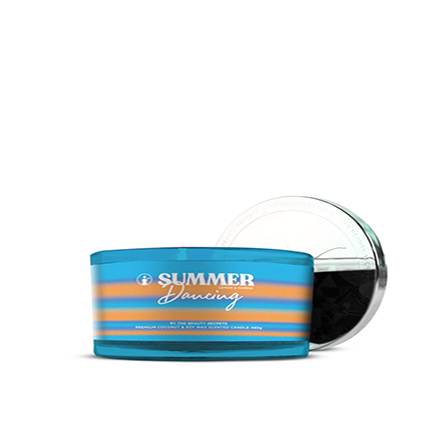
Air Trapped During Wax Mixing and Pouring
Air pockets can also originate before the wax enters the container. Vigorous stirring, pouring from excessive height, or transferring wax through equipment that introduces air can create bubbles. If these bubbles do not escape before the wax sets, they remain inside the candle.
Some cavities are therefore caused by shrinkage, while others are directly related to trapped air. In actual production, both mechanisms may occur in the same candle. A small bubble can become a larger visible cavity when surrounding wax contracts during cooling.
Uneven Cooling and Temperature Differences
Cooling conditions influence how evenly the wax solidifies. A cold production room, direct air-conditioning airflow, or a container placed on a surface that removes heat quickly can cause one part of the candle to set much faster than another.
For example, if a glass jar sits directly on a cold metal or stone worktop, the bottom may lose heat faster than the upper section. If containers are placed too close together, heat may also dissipate unevenly between adjacent jars. These differences can contribute to internal cavities, surface depressions, and wax separation from the glass.
How Does Pouring Temperature Affect Sinkholes?
Pouring temperature determines how much heat enters the container and how the wax behaves during solidification. Pouring at an unsuitable temperature can increase the risk of uneven setting, poor surface appearance, and internal voids.
If wax is poured too hot, it has more heat to release before becoming fully solid. The surface and outer layers may begin setting while the center remains warm and liquid. As the core eventually cools and contracts, the surface can collapse into a crater.
Pouring at an excessively low temperature can create a different problem. The wax may begin thickening before it has flowed evenly around the wick and container. This can make it harder for air bubbles to escape and may produce an uneven finish.
There is no single pouring temperature suitable for every container candle. The correct range depends on the wax supplier's technical recommendations, wax blend, fragrance load, dye, container material, and production environment.
Production Example: Different Results from the Same Wax Formula
Consider a production batch using the same soy wax blend and fragrance formula. One group of containers is poured within the wax supplier's recommended temperature range and allowed to cool in a stable environment. Another group is poured at a higher temperature and placed near an air-conditioning outlet.
The second group may show deeper depressions around the wick or uneven surfaces because the wax experiences different cooling conditions. This example illustrates why manufacturers should not adjust pouring temperature independently of the cooling environment. A controlled test should change one variable at a time so that the actual cause can be identified.
Can Container Preparation and Wax Mixing Cause Air Pockets?
Yes. Container preparation and mixing procedures have a direct influence on the final appearance of container candles. Even when the wax formula and pouring temperature are correct, poor handling can introduce air or create inconsistent heat transfer.
Container Temperature and Surface Condition
Cold containers can accelerate wax cooling immediately after pouring. This is especially relevant when glass jars are stored in a cold warehouse or moved into production without temperature conditioning.
Manufacturers can evaluate whether gently pre-warming containers improves consistency. The pre-warming temperature should be controlled and appropriate for the glass and wax system. Containers should also be clean and completely dry before filling. Dust, moisture, and inconsistent glass thickness can introduce additional quality concerns.
For example, a factory filling the same candle formula into two glass jar designs may find that the thicker jar cools differently from the thinner one. The production team should test each container design rather than assume that one cooling profile works for every size and shape.
Mixing Speed and Bubble Formation
Fragrance oil and dye must be distributed evenly throughout the wax, but excessive agitation can introduce unnecessary air. Mixing too quickly or using an unsuitable stirring method may create bubbles that become trapped during filling.
A more controlled process uses a consistent mixing speed and sufficient mixing time to achieve uniformity without excessive aeration. Operators should also avoid unnecessary movement when transferring melted wax from the melting tank to the pouring equipment.
How Can Candle Manufacturers Prevent Sinkholes During Mass Production?
Preventing sinkholes requires a repeatable production process rather than relying only on repairing defective surfaces after cooling. A wholesale candle manufacturer should establish process parameters for each wax formula and container combination, then verify those parameters through batch inspections.
Control the Wax Melting and Pouring Process
Wax should be heated according to the technical data provided by the raw material supplier. Operators should monitor the actual wax temperature instead of relying only on the equipment's displayed setting. Temperature differences between the melting tank, transfer line, and filling nozzle can affect the final pouring condition.
Mixing speed, fragrance addition temperature, holding time, and pouring speed should also be standardized. These controls help maintain consistency between production shifts and reduce the risk of introducing air during handling.
Use a Controlled Cooling Environment
After filling, containers should cool in a stable area without strong drafts or sudden temperature changes. The spacing between jars should allow heat to dissipate consistently. Production teams should also avoid moving candles unnecessarily while the wax is setting.
For large-volume orders, cooling conditions should be checked across different positions on the production rack. Candles near an air outlet or at the edge of a cooling area may behave differently from those in the center. Checking only a few containers from one location may overlook these variations.
Apply Relief Holes and a Second Pour When Necessary
Some wax formulations naturally develop a depression around the wick as the center cools. In these cases, manufacturers may use a controlled relief-hole process or a second pour to fill the cavity.
Relief holes are made after the upper layer has begun to set, allowing hidden cavities to connect with the surface. A measured amount of reserved wax can then be added to fill the depression. The second pour should use a compatible wax formula and a controlled temperature to achieve a smooth, consistent finish.
For shallow surface imperfections, carefully applied heat may help level the top. However, surface heating alone does not guarantee that a deep internal cavity has been eliminated. The finished candle should be inspected rather than judged only by its appearance immediately after repair.
How Should Buyers Check Sinkholes and Air Pockets Before Placing Wholesale Orders?
Wholesale buyers should evaluate candle quality beyond the appearance of the top surface. A candle may look smooth immediately after filling but develop a depression or reveal an internal cavity after cooling, curing, or temperature changes during storage.
Before confirming a bulk order, buyers can request production samples made with the same wax, fragrance, wick, container, and filling process planned for the actual order. This provides a more meaningful evaluation than a sample made with a different formula or container.
Inspect the Candle After Complete Cooling
Check the top surface around the wick for visible craters, uneven depressions, and small holes. Where possible, inspect sample candles after the manufacturer's normal cooling and curing period. A surface that appears acceptable immediately after pouring may change as the internal wax finishes solidifying.
Check for Hidden Cavities
Visual inspection cannot identify every internal void. Buyers can ask the factory how it checks for hidden cavities and whether destructive sample inspection is included in its quality-control process. Cutting selected samples through the center can reveal internal holes that are not visible from the top.
For example, if a sample candle has a smooth surface but contains a large cavity beneath the wick area, the defect may become apparent only after the candle is used. This is why sample inspection should include both external appearance and internal structure when the order requires a high level of consistency.
Evaluate Burn Performance and Batch Consistency
Burn testing helps determine whether a visible defect is purely cosmetic or could affect candle performance. Buyers should assess flame stability, wick behavior, melt-pool development, and whether the candle burns as expected under the intended use conditions.
For bulk orders, inspection should cover samples from different production positions or batches. A single well-finished sample does not necessarily represent the consistency of an entire shipment. Buyers should agree on acceptable appearance standards, sampling methods, and defect-handling procedures before mass production begins.
What Should a Wholesale Candle Supplier Include in Its Quality Control Process?
A reliable wholesale candle supplier should be able to explain how it controls raw materials, wax preparation, filling, cooling, and finished-product inspection. These controls are especially important for private-label and OEM candle orders, where the buyer expects consistent results across repeated production runs.
A practical quality-control process may include the following checks:
Raw material inspection: Verify wax type, fragrance specifications, dye compatibility, and incoming material condition.
Temperature monitoring: Record melting, fragrance mixing, and pouring temperatures according to the approved production formula.
Filling inspection: Check fill weight, wick position, container cleanliness, and pouring consistency.
Cooling inspection: Monitor room conditions, container spacing, and visible surface changes during solidification.
Finished candle inspection: Check for sinkholes, air pockets, cracks, uneven tops, and other appearance defects.
Sample testing: Conduct appropriate burn and internal inspections to verify product performance and batch consistency.
Buyers should also ask whether the factory maintains production records for each formula and whether corrective actions are documented when defects occur. A manufacturer that can identify the cause of a defect and demonstrate how it prevents recurrence is better positioned to support long-term wholesale supply.
Conclusion
Sinkholes and air pockets in container candles mainly result from wax contraction, trapped air, unsuitable pouring temperatures, and uneven cooling. Although some degree of surface shrinkage is a natural characteristic of wax, uncontrolled production conditions can turn minor imperfections into recurring quality problems.
For wholesale buyers, the key is to evaluate the manufacturer's process, not just the finished sample. Consistent temperature control, careful mixing, appropriate container preparation, stable cooling, and effective inspection all contribute to better candle quality. When selecting a wholesale candle factory, buyers should prioritize suppliers that can provide repeatable production standards, transparent quality-control procedures, and samples representative of actual bulk orders.
Working with an experienced wholesale candle manufacturer helps brands reduce avoidable defects, maintain a consistent product appearance, and build a more reliable supply chain for container candles.